


Quick answer
- Rate band: ₹18 – ₹715 depending on grade, confirmed on the day you sell.
- Pickup: free across Delhi, Noida, Gurgaon, Faridabad and Ghaziabad, usually within 24 hours.
- Weighing: on your own floor, in front of you, with a written slip.
- Payment: cash, UPI or bank transfer before the material is loaded.
Industrial scrap is a process, not a transaction. Production waste accumulates continuously, storage space is finite, and every collection has to reconcile against a gate pass, a weighment record and an invoice that your accounts team can post without chasing anybody.
We work with manufacturing units across the Delhi NCR belt on monthly and annual rate contracts. The rate sheet is indexed to the market and revised on an agreed cycle, so neither side is renegotiating from scratch every time the truck arrives.
Industrial Scrap rates by grade
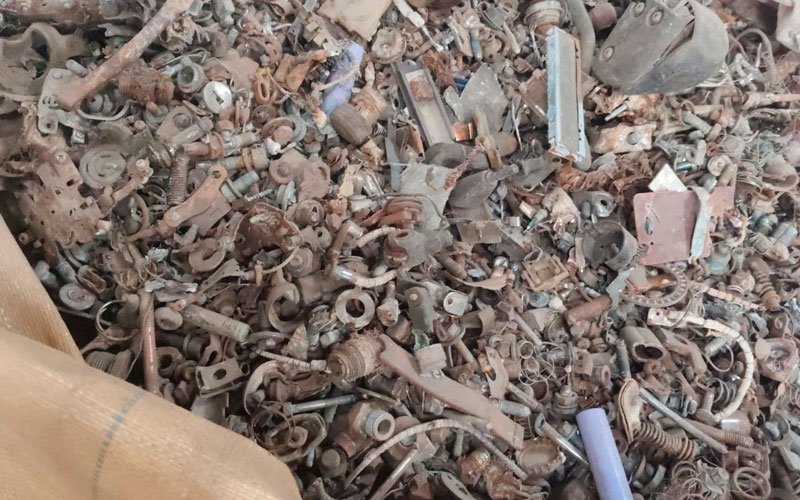
These are working ranges for the Delhi NCR market. Grade decides the number far more than quantity does, so the first thing we do on site is sort and identify.
| Grade | What it covers | Indicative rate |
|---|---|---|
| Steel off-cuts & press waste | Sheet skeleton, blanking waste, trim | ₹26 – 33/kg |
| Steel turnings & borings | Machining swarf, oil allowance applied | ₹22 – 27/kg |
| Aluminium off-cuts | Extrusion ends, sheet trim, die-cast rejects | ₹140 – 180/kg |
| Aluminium turnings | Machining swarf from aluminium components | ₹95 – 125/kg |
| Brass / copper turnings | Component shop swarf, kept segregated | ₹280 – 560/kg |
| Rejected components | Off-spec production, failed QC batches | By material |
| Worn tooling & dies | Dies, moulds, jigs, fixtures — assessed for resale | ₹28 – 95/kg |
| Packaging waste | Drums, crates, wooden pallets, stretch film | ₹6 – 48/kg |
What we accept
- Press, blanking and trim waste from production
- Machining turnings, borings and swarf
- Rejected and off-spec components
- Worn tooling, dies, moulds and fixtures
- Plant and machinery being retired
- Structural steel from shed and mezzanine removal
- Packaging waste — drums, crates, pallets, film
- Complete line or unit decommissioning
How a rate contract works
We survey your waste streams, agree a rate per grade indexed to a published market reference, and fix a collection cycle. Each visit produces a weighment record and a gate pass; each month produces a consolidated invoice and a material-wise summary. Rates are revised on the agreed date, not opportunistically.
Tender and auction participation
We bid on company scrap tenders and e-auctions across NCR and can furnish EMD, GST and PAN documentation, a company profile and past work references. Send the tender document to our email and we will respond with a completed bid within your deadline.
How to sell your industrial scrap
- Send photos. WhatsApp a couple of clear pictures with a rough quantity to +91 79831 29840. Photographs settle grading questions faster than any description.
- Get an indicative rate. We reply with a range, usually within the hour during working times.
- Book the pickup. Our team reaches you with the scale, tools and vehicle. Larger lots get a free survey first.
- Watch the weighing. Every grade is weighed separately and written on a slip you keep.
- Take payment. Cash, UPI or bank transfer settles before loading. Invoice and gate pass follow on request.
Industrial Scrap — common questions
Can we set up a monthly scrap collection contract?
Yes — that is most of what we do on the industrial side. We survey your waste streams, agree a rate sheet per grade, fix the collection cycle and supply segregation bins. Rates are indexed to the market and revised on an agreed date rather than argued each visit.
Do you participate in scrap tenders and e-auctions?
Regularly. We can provide EMD, GST registration, PAN, a company profile and references from comparable work. Email the tender document to scrapvanta@gmail.com and we will return a completed bid within your timeline.
How do you handle segregation inside our plant?
We supply labelled bins for each stream and brief your stores team on what goes where. Segregated material earns a materially better rate — particularly brass and aluminium turnings — so the discipline pays for itself within a couple of collections.
What documentation comes with each collection?
A gate pass, an item-wise weighment record and a GST invoice, consolidated into a monthly material-wise summary. Where you maintain an asset register we reconcile removals against tag numbers so disposals close out cleanly.