

Scrap buyers, Delhi NCR
Key points
- Copper price is set by grade, not weight — the spread between bright wire and armature copper is over ₹300 per kilo.
- Tinning, solder, paint and wire thickness are what push copper down a grade.
- A single blended rate for a mixed copper drum almost always favours the buyer.
- Burning insulation is illegal, oxidises the copper and reliably lowers what you receive.
Copper is the highest-value material in an ordinary scrap load, and it is also the one where sellers lose the most money. Not through outright cheating — through grading. Two drums of copper that look identical to anyone who has not handled the trade can be worth ₹300 a kilo apart, and if nobody sorts them, the buyer decides which price applies.
The six grades that matter
Indian scrap yards work broadly to the same grades the international trade uses, with local names layered on top. These are the ones you will actually be quoted against.
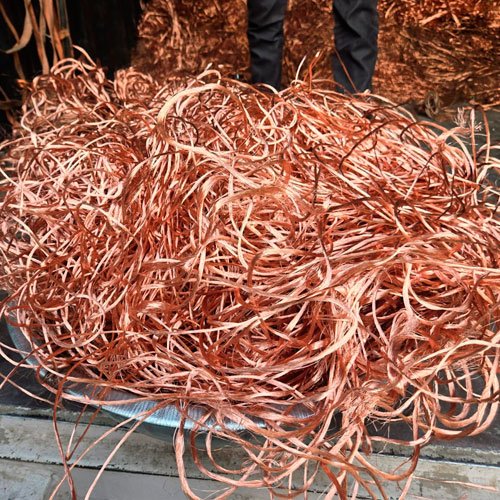
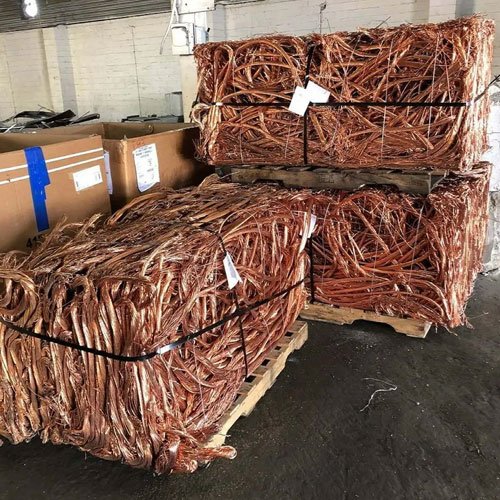
Bright and shiny (millberry). Clean, uncoated, unalloyed copper wire above 1.6 mm with a bright surface. No tin, no solder, no insulation, no oxidation. This is the top of the market.
No. 1 heavy copper. Clean tube, busbar and heavy section — free of solder, brazing, fittings and excessive oxidation. Typically ₹25–35 below bright.
No. 2 copper. Unalloyed copper carrying light solder, paint, oxidation or coating, plus wire thinner than 1.6 mm. The jump down from No. 1 is meaningful.
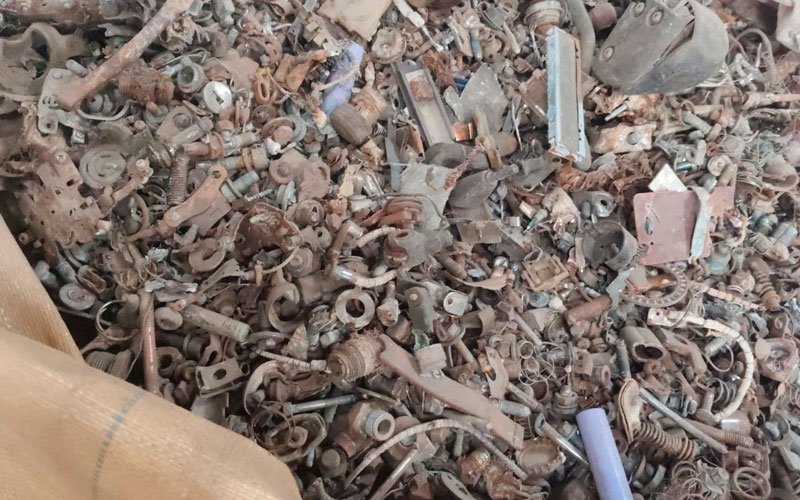
Utensil copper. Household vessels, degchi and boilers. Usually tinned inside and heavily oxidised outside, but the base metal is good and quantities are often larger than owners expect.
Winding or coil copper. Enamelled winding wire pulled from motors, transformers and chokes. The enamel coating has to be burned off in processing, so it prices below No. 2.
Armature copper. Copper still bound inside motor armatures and stators. You are paid for copper that has not yet been extracted, so the rate accounts for the iron content and the labour. Dismantle it yourself and you move up two grades.
What pushes copper down a grade
- Tinning. A silvery coating on wire means tin. It looks clean but it is not bright grade, and no amount of polishing changes that.
- Solder and brazing. Joints on tube and busbar carry lead or silver alloy that contaminates the melt.
- Wire thickness. Below 1.6 mm, copper is No. 2 regardless of how clean it is, because the surface-area-to-mass ratio raises oxidation losses.
- Oxidation. Green or heavily darkened surface means copper has already been lost to corrosion.
- Attached fittings. Brass unions on copper tube, steel armature laminations, plastic clips — all of it is weight you are paid copper rates for only if the buyer is careless, and weight you are paid nothing for if they are not.
Why blended quoting costs you
Take a realistic mixed drum: 40 kg of bright wire, 30 kg of No. 2, 20 kg of utensil copper and 10 kg of winding wire. Graded and priced separately at current bands, that comes to roughly ₹62,000. Quoted at one blended ₹580 a kilo — which sounds reasonable to someone who has not done the arithmetic — it comes to ₹58,000.
The gap is ₹4,000 on a single drum, and it exists entirely because nobody sorted the copper before it was weighed. Blended quoting is not a rounding convenience; it is where the margin lives.
The remedy is simple: insist that grading happens in front of you, pile by pile, with each pile weighed separately and written on a slip. Any buyer who resists that has told you something useful.
Cable copper and the recovery question
Insulated cable is quoted per kilo of cable, not per kilo of copper, because the recovery percentage varies enormously. A heavy 4-core armoured cable might yield 30% copper by weight; a thin multi-core control cable might yield 12%. Ask the buyer what recovery figure they have assumed. It is a fair question and the answer is checkable — cut a metre, strip it, weigh the copper.
What you should not do is burn it. Burning insulation is an offence under India's air pollution rules, it releases dioxins directly into the lungs of whoever is standing nearby, and it oxidises the copper surface so the metal drops a grade. Burnt copper reliably fetches less than the same cable sold whole. There is no version of this arithmetic where burning wins.
Timing your sale
Copper tracks the London Metal Exchange, and Indian scrap rates follow within a day or two, adjusted for local demand and the rupee. For a household quantity, timing is not worth thinking about — the swing on 50 kg is a few hundred rupees. For a tonne of industrial copper it is worth watching for a fortnight before committing.
Practically: get quotes from two or three buyers on the same day, since a rate is only comparable against another rate from the same morning. And once you have a quote you like, ask how long it holds. A buyer who will commit for 48 hours is quoting a real number.
Questions
How do I know if my copper is bright grade?
It must be uncoated, unalloyed, above 1.6 mm thick and free of tin, solder or paint, with a genuinely bright surface. A file test on a hidden edge shows the true metal under any tarnish. If the wire has a silvery cast, it is tinned and drops to No. 2 regardless of how clean it looks.
Is it worth dismantling motors to get the winding copper out?
If you have the labour, yes — the jump from armature rate to winding rate is substantial, often more than doubling what that copper earns. For a handful of small motors it is rarely worth the hours. For a pallet of them it usually is.
Why do buyers quote different rates for the same copper?
Sometimes genuine market variation, but more often a different assumption about grade. Ask each buyer which grade they are quoting your material as. When two quotes differ by ₹80 a kilo, it is almost always because one of them is calling your bright wire No. 2.
Does copper price change daily in India?
Effectively yes. Copper follows LME, which moves continuously, and Indian scrap rates adjust within a day or two. That is why a quote from last week is not a quote, and why any serious buyer will tell you how long their number holds.